

The EU Now Makes Pharmaceutical and Cosmetic Producers Pay to Remove Their Molecules From Wastewater

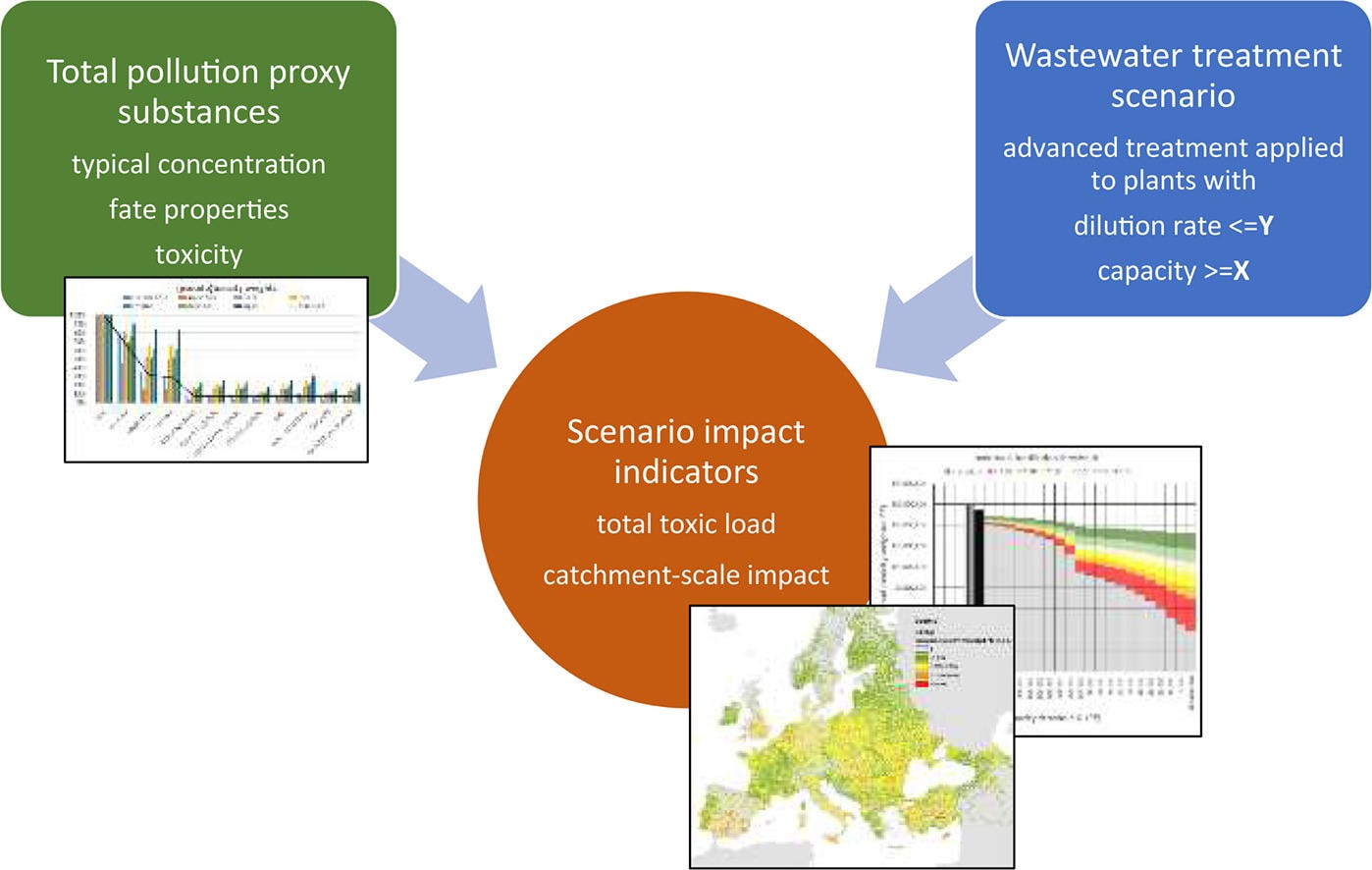
A revised directive mandates advanced “quaternary” treatment for micropollutants and assigns at least 80% of the cost to the industries that produce them. The European Commission’s own science service has quantified the scale of both the problem and the solution.
The Problem
If you manufacture or sell pharmaceuticals or cosmetics in the European Union, you are about to acquire a new line on your cost structure that did not exist before, tied to a molecule you may have stopped thinking about the moment it left your factory: the residue of your product that ends up, after use, in urban wastewater. And if you operate a water utility, you are about to be required to install a stage of treatment your plants do not currently have, to remove substances your existing processes were never designed to capture. The same piece of legislation reaches both of you, from opposite ends, and binds you together.
The substances in question are micropollutants — pharmaceutical residues, cosmetic ingredients, and other chemicals present in water at extremely low concentrations, measured in nanograms or micrograms per litre, yet biologically active at those concentrations. Conventional wastewater treatment — the primary, secondary, and tertiary stages that remove solids, organic load, and nutrients — was not designed to remove them, and largely does not. They pass through the treatment plant and into rivers, lakes, and coastal waters, where even at trace levels they affect aquatic life and accumulate in the environment. The European Commission has identified the source with unusual precision: pharmaceutical and cosmetic residues are the dominant contributor, responsible for the large majority of the micropollutants that the new treatment requirement is designed to capture.
This is what makes the problem unavoidable for two distinct industries at once. Water utilities must build the capability to remove micropollutants. Pharmaceutical and cosmetic producers must pay for it. Neither can opt out, because the legislation assigns the obligation to both — the physical obligation to the utility, the financial obligation to the producer — under the polluter-pays principle. The question for each is no longer whether this applies, but how large the cost will be, and when it lands.