
Schumpeter Digest #98


Schumpeter provides a clear, structured way for entrepreneurs, investors and decision-makers to understand which emerging technologies are genuinely relevant for products, markets and strategic planning. It transforms peer-reviewed research and engineering advances into a standardised analytical format that explains how each technology works, where it can be applied, what benefits and constraints it presents, and how mature it is according to recognised Technology Readiness Levels.
This structure converts complex scientific material into operational insight. It clarifies which problems a technology can address, how close it is to real deployment and which sectors may be affected. Subscribers gain full access to the complete Schumpeter database, including comparable analytical profiles, category-based navigation and a coherent map showing how innovations progress from laboratory research to practical adoption.
Full access unlocks the complete technology database, all category-based pathways, TRL-verified profiles and the full archive of structured analyses.
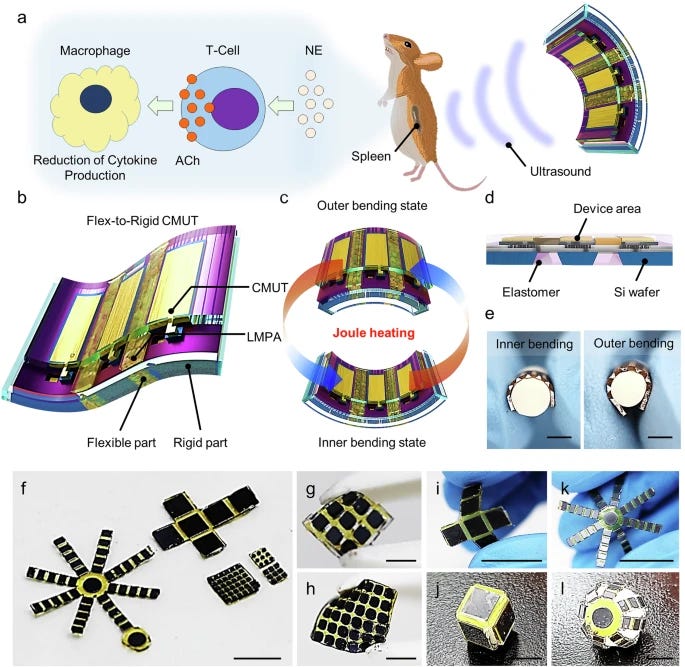
Wearable Ultrasound Patches for Continuous Anti-Inflammatory Therapy and Organ-Specific Neuromodulation
This technology profile describes a new class of wearable ultrasound patches based on flexible capacitive micromachined ultrasonic transducer arrays with statically adjustable curvature. The system combines wafer-scale microfabrication with a flex-to-rigid mechanical architecture that allows a soft, body-conformable device to retain the acoustic performance of rigid ultrasound transducers. By embedding a low-melting-point metal alloy within the structure, the curvature of the patch can be adjusted and fixed, enabling controlled focusing of ultrasound energy without complex electronic beamforming. The technology supports long-term, hands-free therapeutic use and has been experimentally validated in preclinical models for anti-inflammatory treatment through targeted spleen stimulation. Its design addresses key limitations of existing wearable ultrasound systems, particularly in terms of scalability, manufacturability, and precision of acoustic delivery. For healthcare providers, device manufacturers, and research institutions, this approach opens a practical pathway toward continuous, home-based ultrasound therapies that are safer, more precise, and easier to deploy than conventional hospital-based systems. The work demonstrates how advances in flexible electronics and microsystems engineering can translate ultrasound from episodic diagnostics into continuous therapeutic interventions.
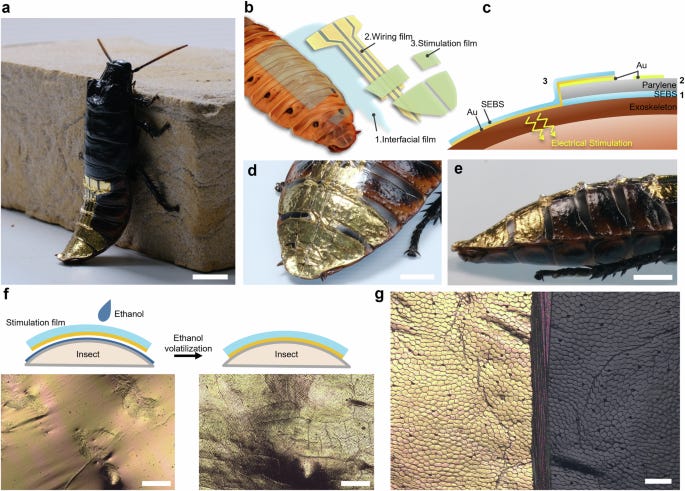
Ultra-Thin Adhesive Bioelectronic Films for Non-Invasive Control of Insect Locomotion
This technology concerns ultra-thin, flexible, self-adhesive electrode films designed to control insect locomotion through non-invasive electrical stimulation applied to the abdominal surface. The approach integrates bioelectronics with living organisms, creating cyborg insects whose movement can be guided while preserving natural sensory and motor functions. Unlike conventional methods that rely on invasive electrodes inserted into sensory organs or neural tissues, this solution operates externally on the exoskeleton. The electrodes adhere through a biocompatible wet-volatile process that ensures stable electrical contact without mechanical damage. Electrical stimulation triggers predictable turning and acceleration responses by exploiting natural abdominal reflexes. The system demonstrates stable performance over time, even under repeated movement and friction. Experimental validation shows reliable left, right, and straight-line control in cockroaches. The technology reduces physiological stress on the organism compared to implanted alternatives. It enables longer operational lifetimes and more natural behavior during uncontrolled phases. Potential applications extend to navigation, exploration, and sensing tasks in constrained environments. The work illustrates how flexible electronics can interface with biology at minimal cost to organism integrity. It provides a practical platform for biohybrid systems research. For industry and public users, it opens new possibilities in distributed sensing and robotics. The profile highlights a scalable, repeatable, and low-impact method for bioelectronic control.
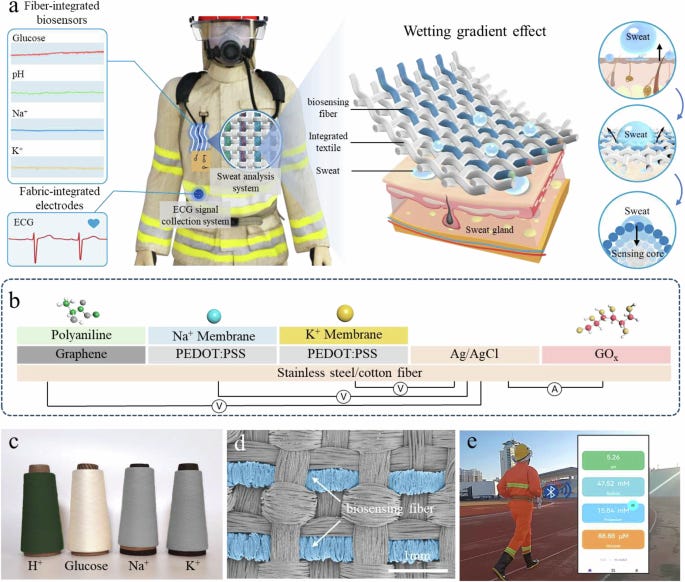
Smart Firefighter Garments for Real-Time Heat Stress Detection and Physiological Monitoring
This technology profile describes an advanced smart garment designed to reduce the risk of heat exhaustion among firefighters through continuous, real-time physiological monitoring. The system integrates ultrasensitive textile-based biosensors and fabric electrodes directly into protective clothing, enabling simultaneous detection of sweat biomarkers and cardiac activity during intense physical activity. By exploiting a controlled wetting gradient within engineered fibers, the garment captures extremely small volumes of sweat with high speed and precision. This allows early identification of abnormal physiological conditions before critical symptoms develop. The solution addresses the operational limits of conventional firefighter equipment, which lacks integrated health monitoring capabilities. It combines wearable comfort, mechanical robustness, and biochemical sensitivity in a single textile platform. Data collected by the garment can be transmitted wirelessly for local or remote supervision. The technology demonstrates a practical pathway toward preventive safety systems in high-risk occupations. It is designed for continuous use in harsh environments without restricting mobility. Experimental validation confirms reliable performance during real physical exertion. For public safety agencies, it offers a concrete tool to reduce morbidity and mortality. For industry, it illustrates scalable smart textile manufacturing. For researchers, it provides a reference architecture for multi-biomarker wearables. Overall, the technology translates laboratory biosensing into operational protective equipment.