
Low-Cost Precision Laser Control for Optical Experiments, Sensors and Scientific Instruments

Executive Summary
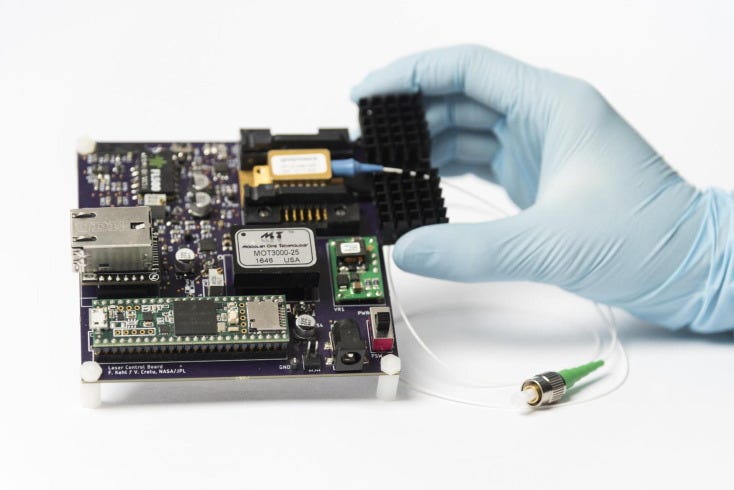
Many scientific instruments rely on lasers that must operate with extremely stable optical power, wavelength and temperature. Achieving this stability normally requires expensive laboratory controllers designed specifically for research-grade laser diodes. The technology examined in this profile describes a compact open-source hardware platform that combines a laser driver, temperature controller and microcontroller-based control system in a single device. The system is designed for fiber-coupled butterfly laser diodes, a common format used in spectroscopy, sensing and analytical instrumentation. By integrating electrical control, temperature regulation and remote monitoring, the platform provides a stable optical output required for scientific measurements. The design is open source and built using commercially available electronic components, which significantly reduces the cost compared with commercial laboratory controllers. The hardware allows lasers to operate either at constant current or constant optical power, depending on the needs of the application. These two operating modes are essential for experiments that require either electrical stability or precise optical output. The system also includes a high-precision temperature controller that stabilizes the laser wavelength and prevents thermal drift during long measurements. Protection circuits prevent accidental over-current conditions that could damage the laser diode. Because the controller can be operated through a microcontroller and connected to a computer, the laser can be monitored and controlled remotely. This makes the platform suitable for automated experiments, remote sensing systems and laboratory instrumentation. The overall design therefore provides a low-cost and flexible solution for laboratories that require stable laser operation but cannot rely on expensive commercial equipment. The technology illustrates how open-source electronics can make advanced scientific tools more accessible.