
5G Deep Learning Positioning for Indoor Navigation and Smart Manufacturing

Executive Summary
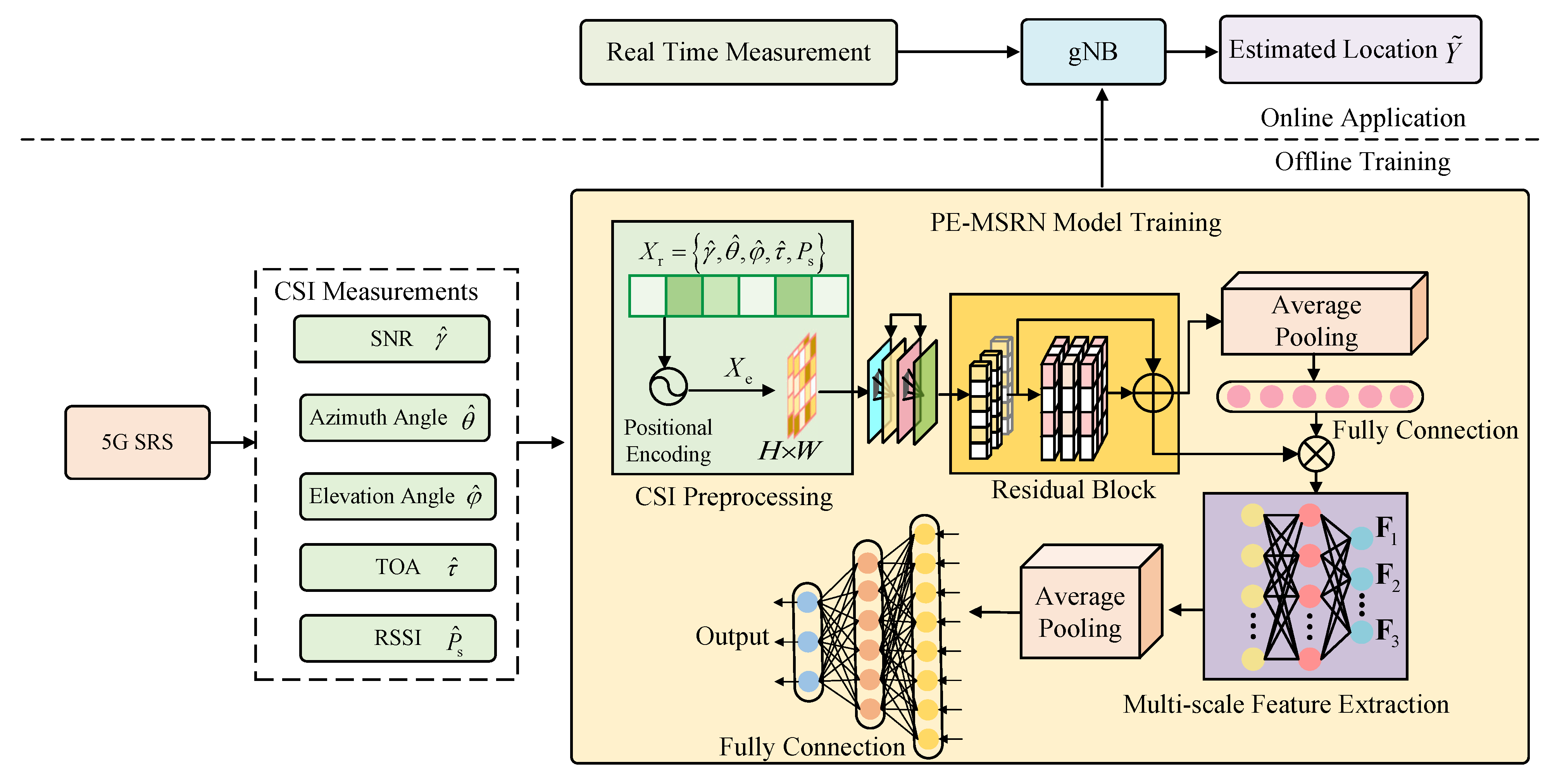
The rapid deployment of 5G networks has created demand for positioning technologies capable of functioning in GNSS-denied environments, such as indoor factories, underground infrastructures and dense urban areas where satellite signals are unreliable or absent. Traditional positioning methods relying on single measurements like received signal strength or time of arrival are inadequate under multipath and non-line-of-sight conditions, resulting in high error rates. The presented approach introduces a Positional Encoding Multi-Scale Residual Network (PE-MSRN), which combines deep residual learning with positional encoding of angle-of-arrival data extracted from 5G channel state information. This innovation transforms raw measurements into structured spatial features represented as two-dimensional images, enabling the network to capture local and global dependencies simultaneously. Simulation and validation experiments demonstrate positioning accuracy at the sub-meter level, achieving as low as 20 cm in controlled scenarios, outperforming baseline convolutional and recurrent architectures. By exploiting structured priors and multi-scale convolutional mechanisms, the method delivers robust convergence, efficient training and reduced computational overhead compared to classical tomography or maximum likelihood approaches. The technology addresses industrial, mobility and safety applications requiring high fidelity localization, offering a cost-effective and scalable solution aligned with future 5G and beyond deployments.